
If you’re looking for the most creative and functional louver facade designs, you’ve come to the right place! Explore the beauty of louver facades and discover 30 of their best design ideas below.
What is a Louver Facade?
A louver facade is a sunshade and ventilation system composed of a series of parallel or angled blades (louvers) on a building’s exterior wall or specific areas. Louver facades come in many types, and different designs can meet different needs. These blades are typically made of metal (such as aluminum alloy, stainless steel), wood, composite materials, or glass, and can be fixed or designed to be adjustable.
Louver facades are so popular because they seamlessly blend form and function: they not only give buildings a unique, modern, or classic aesthetic, but also effectively block intense sunlight, reduce glare and heat ingress, and improve natural ventilation, significantly reducing energy consumption and enhancing indoor comfort. At the same time, it can provide a certain degree of visual privacy and enhance the layering and dynamic rhythm of the building’s facade.
22 Louver Facade Designs for Your Project
Commercial Buildings
Wave-Shaped Louver Facade:
This design draws inspiration from the wavy louver facades created to address summer temperatures.
The vertical, streamlined aluminum louvers create a sense of depth while shielding against intense sunlight, while maintaining a sense of openness. They not only effectively enhance the interior environment but also create a vibrant, changing light throughout the day.

Dynamic Wood-Grain Louver Facade:
The designer created a transparent space with dynamic wood-grain louvers. Its regular frame supports the seemingly light and transparent volume. The unique wood-grain louvers serve as decorative elements, making the building feel distinct and interesting. The interior continues the wood-like texture, creating a warm atmosphere that further emphasizes the design’s purpose.

Modern White Louver Facade:
The use of white aluminum grilles on the building’s facade introduces a new level of sophistication to the building’s exterior. The use of white aluminum grilles instantly imbues the building’s exterior with a stylish aesthetic. The unique metallic texture enhances the building’s contours, perfectly showcasing a modern and minimalist style.

Wooden horizontal louver facade:
Woodgrain aluminum horizontal louver systems combine the warmth of natural wood with the strength and durability of aluminum. Designed for modern facades, shading, and ventilation, these louvers feature a realistic woodgrain finish achieved through advanced powder coating or sublimation technology. Unlike real wood, they will not warp, crack, or fade, making them ideal for both exterior and interior applications.
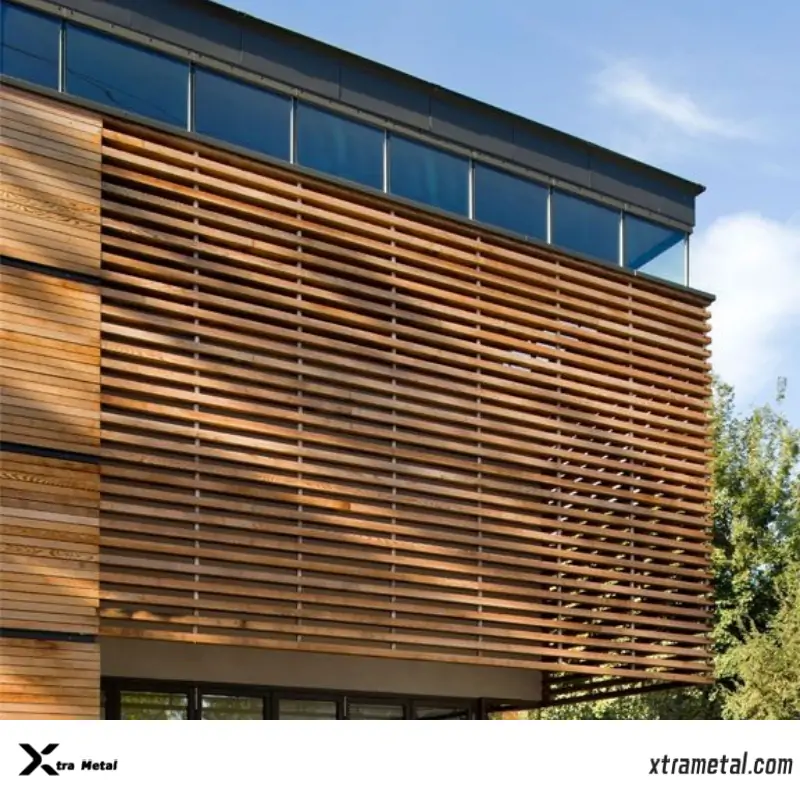
Aluminum Batten louver facades:
Waterproof, rust-resistant, and corrosion-resistant, they remain pristine even after over a decade of weathering! The airy, light-permeable design saves on daytime electricity bills and provides soundproofing, instantly transforming your home into a tranquil space. Hidden technology: sand and dust protection, mosquito repellent, and privacy protection!
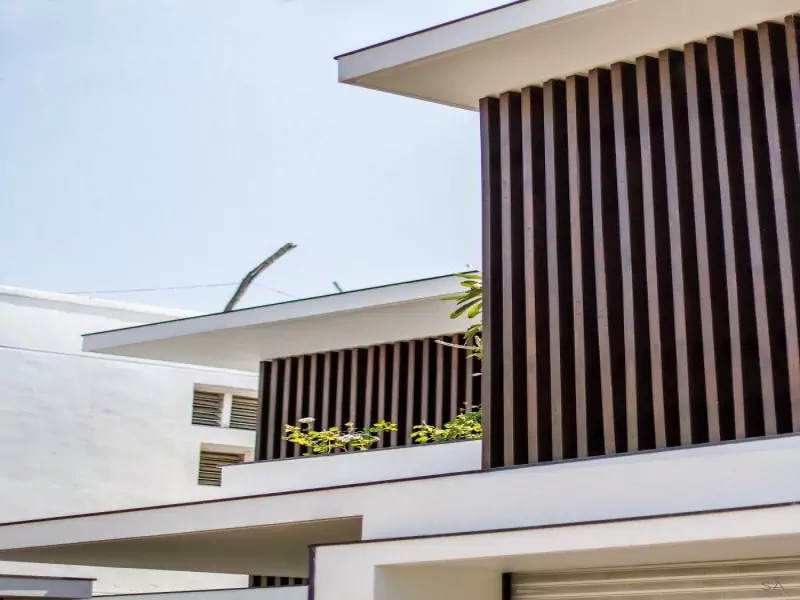
Hollow Carved Artistic Louvers:
Laser cutting, stamping, or engraving is performed on the louver blades to create exquisite designs, motifs, or cultural symbols. Sunlight filters through the hollowed-out areas, casting shifting shadows on the floor and interior. Combining artistry with functionality, this creates a unique light and shadow effect that enhances cultural heritage.

High-grade Black Louver Facade:
A high-grade black louver facade is a sleek and modern architectural solution designed to enhance both aesthetics and performance. Featuring clean horizontal or vertical lines, this facade system provides effective shading, ventilation, and privacy while giving buildings a bold, contemporary appearance.

Colored Louver Facade Design:
The louver blades’ colors gradually transition according to a specific pattern (e.g., height or angle), creating a soft or vibrant color rhythm that injects vitality and dynamism into the building’s facade. The strong visual identity creates a cheerful or tranquil atmosphere, enriching the facade.

Adjustable Smart Louver Facades:
Louvre angles can be adjusted via motors, sensors, or manual controls, dynamically changing based on sunlight, temperature, time of day, or user needs to achieve the optimal balance between shading and daylighting. This maximizes energy savings, improves indoor comfort and flexibility, and enables intelligent building management.

Ceramic louver facade:
A ceramic louver facade is a stylish and durable cladding system widely used in modern architecture for shading, ventilation, and energy efficiency. Made from high-quality terracotta or ceramic materials, these louvers provide excellent resistance to UV rays, weather, and fading while requiring very low maintenance. Their natural textures and earthy tones bring warmth and elegance to building exteriors, making them ideal for cultural centers, universities, commercial complexes, and residential projects.

Terracotta Louvered Facade:
A truly classic terracotta building, its exterior reflects the unique color palette of the surrounding area and incorporates the traditional materiality of humble materials. It stands out as a landmark that celebrates values such as modernity, sustainability, and technology.

Organic Forest Louver Facade Design:
The building’s facade is reminiscent of trees in a forest. The three-dimensional wood-grain aluminum grilles mimic the depth and rich shadows of overlapping branches and leaves in a forest.

Light, Scaly Facade:
This parking structure, located at the Cologne Trade Fair in Germany, is striking for its innovative and symbolic facade. Not only does the building appear light and transparent, but its S-shaped structure is also enveloped in a poetic, organic shell, giving it a light, plastic quality.

Glass Louver Design:
Since the 1960s, glass curtain walls have dominated the exteriors of high-rise buildings, offering a sense of transparency and a sleek aesthetic.

Residential Buildings
Modern House Facade with Vertical Louvers:
A modern house facade with vertical louvers offers both style and functionality, making it a popular choice in contemporary residential design. Vertical louvers add sleek, linear geometry to the exterior while providing shade, ventilation, and privacy. Homeowners can control natural light by adjusting the louvers, keeping interiors cool in summer and bright in winter. Available in materials such as aluminum, woodgrain aluminum, or timber, vertical louvers enhance energy efficiency and reduce glare while complementing minimalist architecture. They also act as a design feature, adding depth and rhythm to the facade. A vertical louver system transforms a modern home into an elegant, sustainable, and visually striking structure.
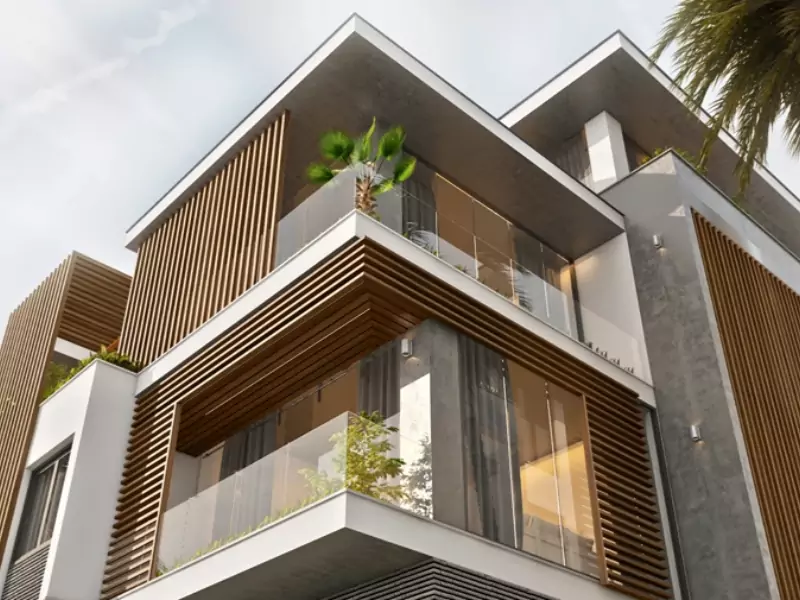
Horizontal Louver Residential Facade:
A horizontal louver residential facade is a modern architectural feature that combines clean lines with practical benefits. Horizontal louvers create a sleek, layered look that complements contemporary home designs while improving comfort and energy efficiency. They provide excellent shading by blocking direct sunlight, reducing heat gain, and protecting interiors from glare, all while maintaining airflow and natural light. Homeowners can choose from durable materials like aluminum, woodgrain aluminum, or timber, depending on the desired style and maintenance needs. Beyond functionality, horizontal louvers add texture and visual depth to the exterior, giving the residence a distinctive and elegant facade.

Green Louver Exterior Wall Facade:
A green louver exterior wall facade adds a refreshing and contemporary touch to modern architecture. The soft green tone creates a natural, calming effect while blending seamlessly with urban or landscape surroundings.

Coastal Villa’s Patio Aluminum Louvered Wall:
A coastal villa’s patio aluminum louvered wall combines luxury living with practical performance. Designed to withstand the harsh seaside environment, aluminum louvers resist corrosion, salt spray, and UV damage while offering a sleek, modern aesthetic.
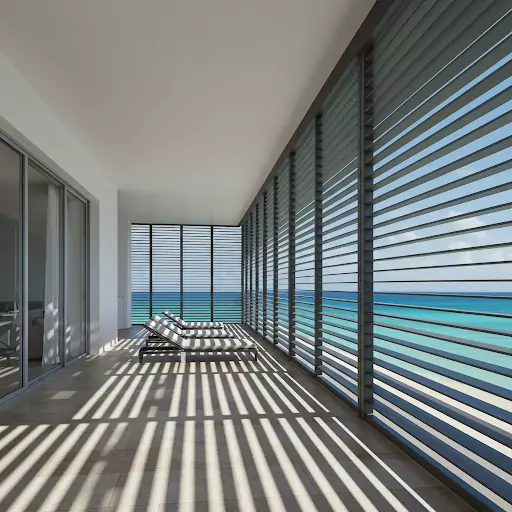
Concrete Combined with Louver Exterior Wall Design:
The blinds are designed to be automated and can rotate 90 degrees around their axis. They can be controlled by a mobile phone or programmed to adjust through a timer system. An ultra-modern color scheme was chosen, with different shades of gray for the ceiling, walls, and floors. The exposed concrete walls were also left untreated and used directly for interior decoration.

Vertical Louver Panels Exterior Wall:
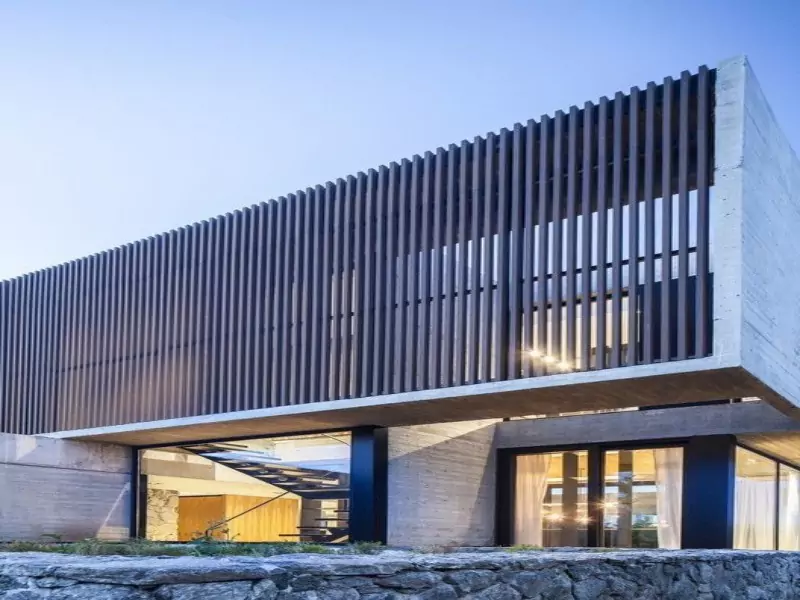
The exterior wall combines modernist concrete structure, natural stone base, and vertical louver cladding to deliver both visual sophistication and functional performance. It balances transparency and shading, making the building environmentally responsive while maintaining a timeless architectural elegance.

Architectural Louver screen wall:
A beautifully detailed architectural screen wall that blends functionality with refined aesthetics. The wall is composed of vertical slats, arranged with consistent spacing to allow controlled light and visual connection between indoors and outdoors. This design achieves a delicate balance of privacy, ventilation, and natural illumination.

Black Louver Facade:
A black louver facade for a house creates a bold and sophisticated architectural statement. Sleek black aluminum or steel louvers not only provide modern aesthetics but also deliver practical benefits such as sun shading, ventilation, and enhanced privacy.

Frequently Asked Questions (FAQs)
What materials are commonly used for louver facades?
Common materials include aluminum, woodgrain aluminum, timber, ceramic, terracotta, stainless steel, and glass.
What are the benefits of vertical louvers for residential buildings?
Vertical louvers provide controlled natural light, ventilation, privacy, energy efficiency, and modern visual appeal.
How do horizontal louvers improve home comfort?
Horizontal louvers block direct sunlight, reduce glare, improve airflow, and maintain a layered, sleek exterior design.
Can louver facades be adjustable?
Yes. Smart louver systems can be motorized or manually controlled to change angles based on sunlight, temperature, or user preference.
Are aluminum louvers durable for coastal environments?
Yes. Aluminum louvers are corrosion-resistant, lightweight, and withstand UV exposure, salt spray, and harsh weather conditions.
How do woodgrain aluminum louvers differ from real wood?
Woodgrain aluminum louvers mimic natural wood aesthetics but are more durable, resistant to warping, cracking, and fading, and require minimal maintenance.
Can ceramic or terracotta louvers improve energy efficiency?
Yes. Ceramic and terracotta louvers provide excellent shading, reduce heat gain, and enhance natural ventilation, lowering energy consumption.
What design styles are available for louver facades?
Designs range from wave-shaped, high-grade black, colored gradients, hollow-carved, modern white, organic forest-inspired, to glass and terracotta facades.
Are louver facades suitable for commercial buildings?
Absolutely. They are ideal for commercial structures, schools, offices, cultural centers, and public buildings, providing shading, ventilation, and visual sophistication.
Conclusion
Louver facades offer the perfect combination of form, function, and sustainability for modern architecture. From sleek black aluminum louvers to warm woodgrain designs, adjustable smart systems, and ceramic or terracotta solutions, these facades elevate both aesthetics and building performance. They provide effective shading, ventilation, privacy, and energy efficiency, while adding depth and rhythm to residential, commercial, and public structures. Choosing the right material and design ensures durability, low maintenance, and a lasting visual impact. Whether for contemporary homes, high-rise commercial buildings, or coastal villas, louver facades are a smart and stylish investment in modern architecture.
Speak with a trusted advisor to discuss your project goals and design needs
Horizontal louvers are one of the most effective facade elements for solar control. For a complete guide covering types, specifications and a five-step selection framework, see our horizontal louvers guide.