
What is A Baffle Ceiling
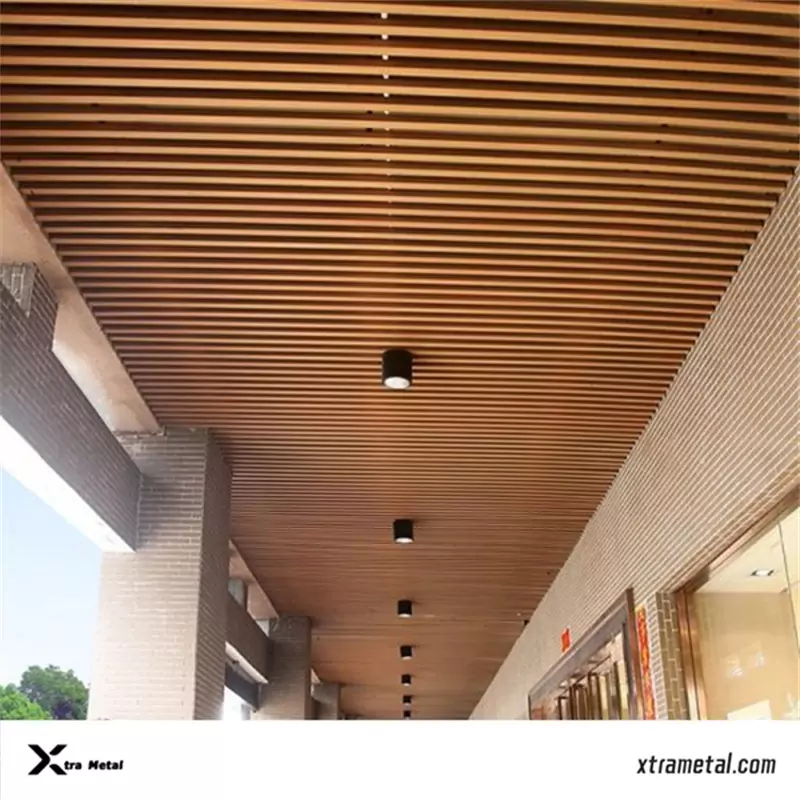
Picture a noisy office turning quiet and stylish with hanging panels. That’s what baffled ceilings do. They are straight panels that hang down from the main ceiling. Made often from aluminum, they help soak up sound, let air flow, and hide things like lights or vents.
Baffles fit well in modern builds. They give an open feel while fixing echo problems. At Xtrametal, we supply these for projects in over 120 countries, with custom options to match your needs. This guide will explain types, where to use them, how to install, prices, and tips.

A baffle ceiling is a type of hanging system with long, narrow panels. These panels, or baffles, are set apart to let light and air pass through. They differ from full drop ceilings by being more open.
Baffles started in big halls to cut noise. Now, they use materials like aluminum for strength. Unlike batten ceilings, which are flat strips, baffles can be shaped for better sound spread. Louvers are more for shade, but baffles focus on acoustics.
For more on acoustics, see Wikipedia’s page on suspended ceilings.
Types of Baffle Ceilings
Baffle ceilings come in different styles. We at Xtrametal make many in aluminum for easy custom work. Here’s a list:
- U-Shaped Baffle Ceiling: It’s Roll Forming production technology, more are applicate interior. Overcome insufficient budget issues
- Extrusion Profile Ceiling: The extruded aluminum baffle uses a 6063 aluminum alloy through extrusion to form.
- Click on Batten Ceiling: uses a 6063 aluminum alloy through extrusion to form. And composed of two parts (base plate and panel), also known as the “AB panel” system. This design is not only easy to install but also achieves a simpler and more modern visual effect.


What are the benefits and disadvantages of a baffle ceiling?
U-Shaped Aluminum Baffle Ceiling
Advantages
- Cost-effective solution
Produced using roll-forming technology, U-shaped baffles do not require molds, significantly reducing tooling and production costs. This makes them ideal for projects with limited budgets. - Short production lead time
Since no mold development is needed, production is faster compared to extruded systems. - Design flexibility
Available in multiple widths, heights, and installation spacings.
Supports a wide range of RAL colors and woodgrain finishes. - Ideal for interior spaces
Commonly used in offices, shopping malls, corridors, and public interiors. - Open ceiling system
Allows easy integration with lighting, sprinklers, and HVAC systems. - Easy installation and maintenance
Installed with standard carriers, making on-site work efficient.
Disadvantages
- Lower structural rigidity
Compared to extruded baffles, roll-formed U baffles have lower hardness and straightness. - Mainly suitable for interiors
Not recommended for harsh outdoor environments with strong wind loads.
Extruded Aluminum Baffle Ceiling
Advantages
- High structural strength
Manufactured from 6063 aluminum alloy through extrusion, offering superior hardness, straightness, and stability. - Long service life
Excellent performance in both interior and exterior applications, including façades and semi-outdoor spaces. - Flexible shapes
Can be rectangular, square, round, or fully customized. - Secure suspension system
Baffles are fixed to the suspension grid with screws, ensuring a strong load-bearing capacity. - Most popular baffle ceiling system
Widely chosen for high-end commercial and architectural projects.
Disadvantages
- Higher cost
Extrusion molds and material thickness increase the initial investment. - Longer production cycle
Mold development and extrusion processing require more time than roll-forming.
Aluminum Batten Ceiling (Click on Batten System)
The Aluminum Batten Ceiling, also known as the AB panel system, consists of a base panel and a face panel snapped together.
Advantages
- Clean, minimalist appearance
Hidden fixings create a smooth, seamless surface with no visible screws. - Efficient installation
Face panels snap directly onto the base panel without complex tools. - Strong structural design
U-slot structure improves overall rigidity and flatness. - Easy maintenance
Face panels can be removed independently for inspection or concealed services. - Premium visual effect
Ideal for projects prioritizing refined aesthetics.
Disadvantages
- Higher cost than standard baffles
Material usage and installation precision increase overall cost. - High installation accuracy is required
Flatness of the supporting structure must be well controlled to ensure a perfect finish.
Applications and Use Cases
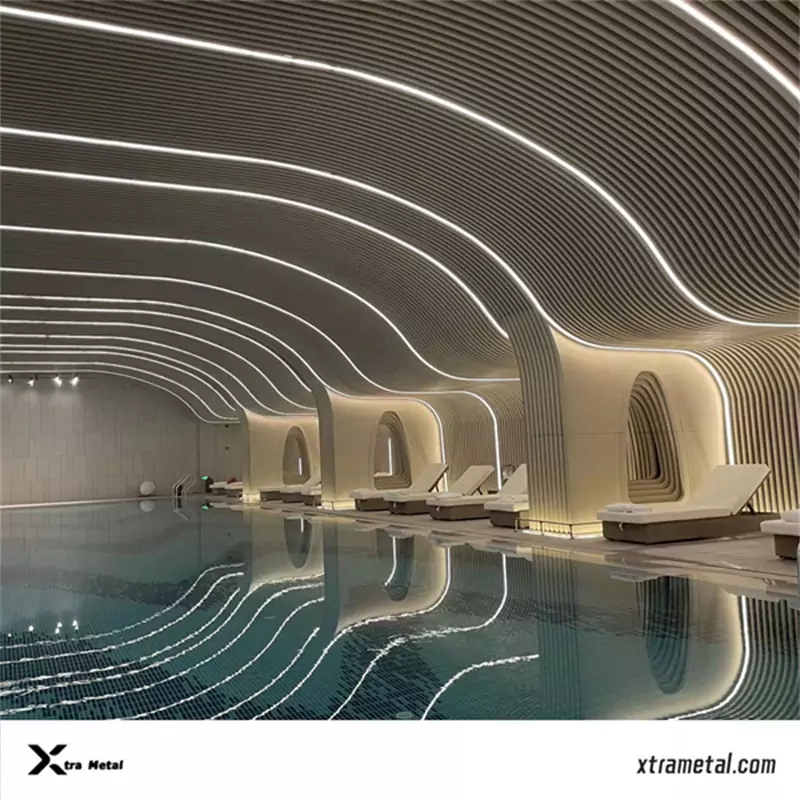
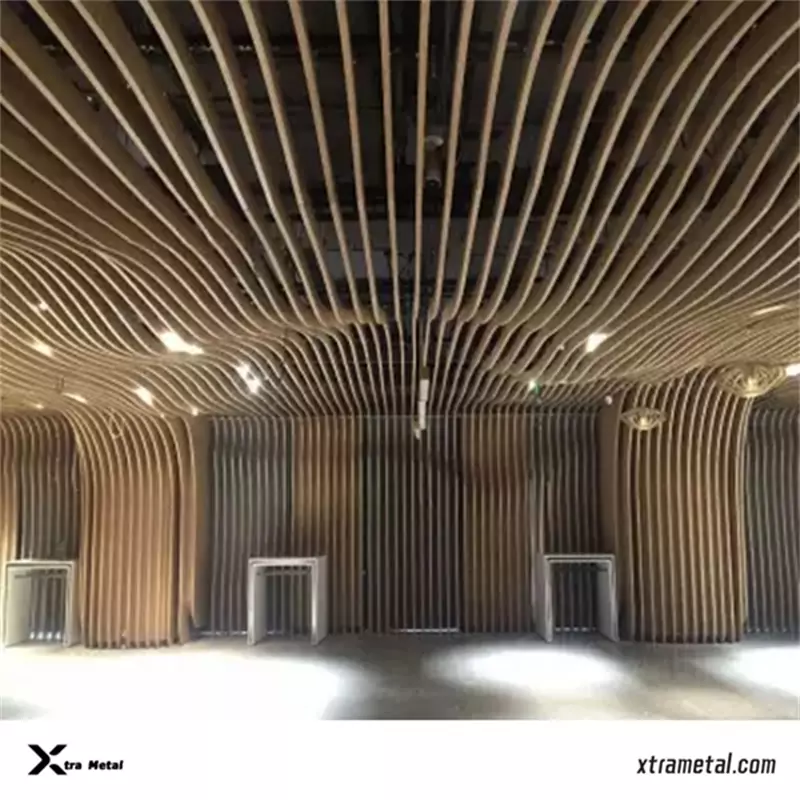
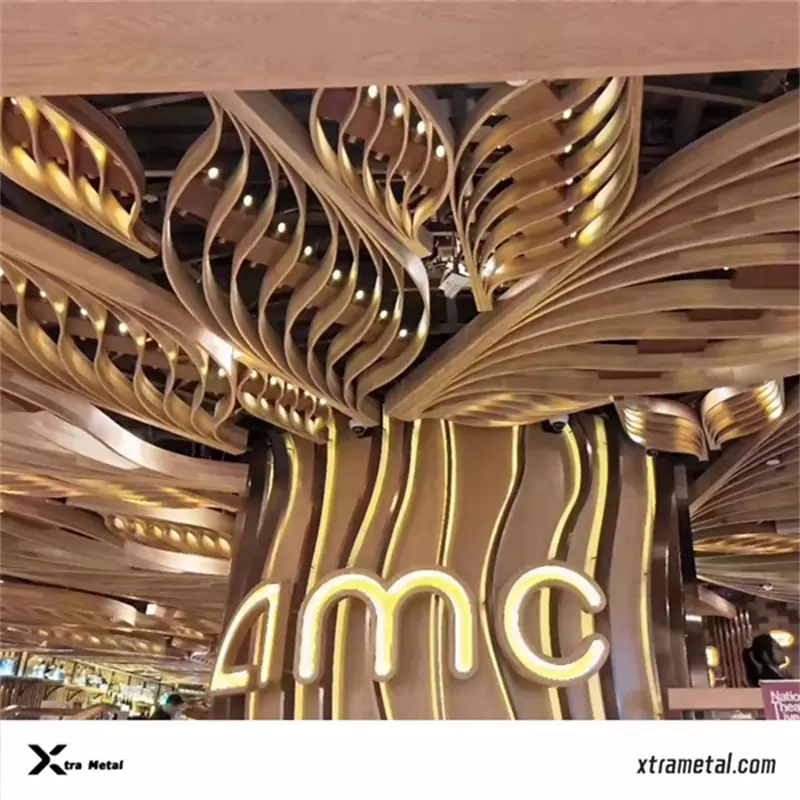
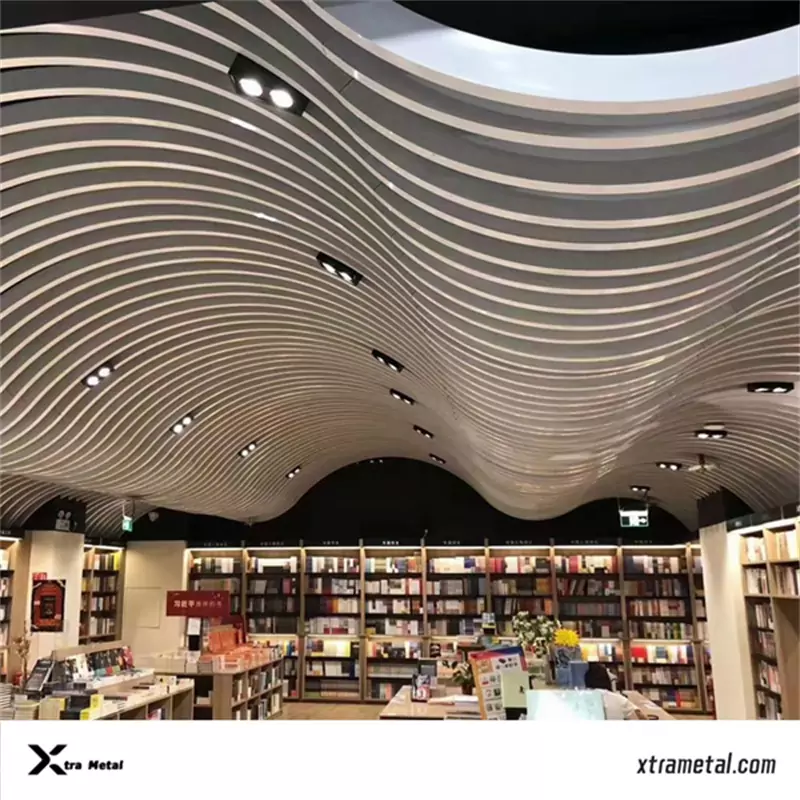
Baffle ceilings work in many places. For construction pros, they fit big projects like villas or commercial spots. At Xtrametal, we help with wind-safe designs and exports, available in numerous RAL colors and wood grain colors· Choose from a range of widths and heights, which can be installed at a varied spacing.
- Commercial: Offices cut noise; retail adds style. Airports use them for open feels.
- Residential: Homes hide vents; renovations add a modern touch. Pair with our pivot doors for a full look.
- Public Spaces: Schools or hotels. Our aluminum ones stand up to heavy use.

Installation Process
Different types of ceilings require different installation methods. You can choose the method that best suits your project, and we can recommend the most suitable installation method for you.
Extruded Aluminum Baffle Ceiling
Materials Required
- Top explosion screw
- Nut
- Screw rod
- Profile keel
Installation Steps
- Step 1: Screw the expansion bolt onto the screw rod.
- Step 2: Use the nut to fix and connect the profile keel and the screw rod.
- Step 3: Tighten the nut to complete the installation.

Aluminum U-Shaped Baffle Ceiling
Materials Required
- Aluminum U-shaped panels
- Top explosion screws
- Nuts
- Screw rods
- Profile keels
- Screwdriver/wrench, measuring tape, marker pen, impact drill (as needed)
Installation Steps
Confirm that the ceiling base is secure and clear the installation area of debris; mark the installation points for screws and keels according to the design dimensions, ensuring even spacing and compliance with installation specifications.
- Step One: Fixing the load-bearing structure. Screw the top explosion screws onto the screw rods, then fix the assembled screw rod components to the marked points on the ceiling base using the top explosion screws, ensuring a secure and stable load-bearing structure.
- Step Two: Installing the profile keels. Use nuts to fix and connect the profile keels to the screw rods, adjust the level of the keels, ensuring all keels are on the same horizontal plane, and tighten the nuts to complete the fixing.
- Step Three: Installing the aluminum ceiling panels. Insert the aluminum ceiling panels one by one into the profile keel slots, adjust the flatness and spacing of the aluminum panels, ensuring a tight fit and neat arrangement without any tilting or looseness.
- Step Four: Inspection and finishing. Thoroughly inspect all installed components, confirming that the aluminum panels and keels are securely connected without looseness or deformation; clean up any remaining debris from the installation site to complete the overall installation.

Aluminum Batten Ceiling
Materials Required
- Frame structure
- Screws
- Aluminum Base
Installation Steps
using a frameless installation method:
- Install the steel structure: First, install a steel or wooden frame.
- Secure the panels: Screw the base plates onto the structure.
- Snap in the square tubes: Gently press the square tubes with the snap-in grooves into place.

Pricing and Cost Factors
At Xtrametal, we offer quotes fast. Our one-stop service saves on shipping. Costs vary by type, thickness, and size. Basic aluminum baffles start at $23 per square foot.
Factors:
- Material: Aluminum is cheaper than wood.
- Size: Bigger jobs have lower per-unit cost. And we can customize any length, height, and thickness.
- Custom: Extras like curves add an extra fee.
- Location: Urban areas cost more for labor.
- Surface treatment: Powder coating, Pvdf, Woodgrain, Marble grain, UV printing
- Delivery time:15 – 25days
Conclusion
Baffle ceilings boost any project with sound control and style. As your aluminum expert, Xtrametal provides custom solutions to fit your needs. Save time with our full service. Reach out for a quote today.
Choosing the Right Ceiling Solution.
FAQs
What is the difference between baffle and batten ceilings?
Baffles are deeper for sound; battens are flat strips.
Are baffled ceilings suitable for homes?
It depends on your project requirements. Customizable Designs: It is this capability for baffle ceilings to be custom-made that is very beneficial. So they can be adapted to meet the special needs of any space.
Can I install them myself?
Yes, for small jobs, but pros ensure safety.
Are they good for homes?
Yes, especially for open living areas.
How to get a custom quote?
Contact Xtrametal for free plans.